Ph.D. Candidate · Data Scientist & AI Researcher

I build machine learning that survives contact with the real world.

Most models are evaluated on data that looks like their training set. Deployed systems rarely get that luxury. Sensors drift, hardware differs, environments change, and the cost of a confident wrong answer can be someone's diagnosis or someone's location under rubble.

My work sits at that failure point: making models robust when the data distribution moves, explainable when the stakes are high, and small enough to run where the data is actually collected.

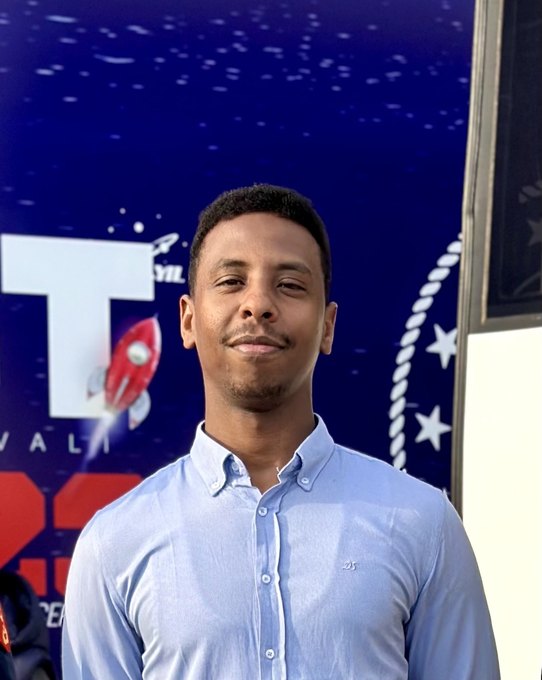
Portrait of Mohamedalfateh T.M. Saeed Istanbul, Türkiye
Currently a researcher on the CHIST-ERA MUTASK project at AGH Kraków and a TÜBİTAK 1001 disaster-response project.
Ph.D., Ondokuz Mayis University AGH Kraków · CHIST-ERA MUTASK TÜBİTAK 1001 Research Scholar IEEE · MDPI · Springer
Research agenda

Three questions I keep returning to

My publications look like they span medical imaging, wireless sensing, and video quality. They don't. They are the same problem seen from three angles: what happens to a model when reality stops matching the training set?

THEME 01

Robustness under distribution shift

If I train on one device today, why does it fail on another device tomorrow?

Hardware heterogeneity and temporal drift silently violate the i.i.d. assumption that nearly every deep architecture rests on. I work on neutralizing that divergence at the signal level, through statistical alignment and physics-aware preprocessing, rather than papering over it with more parameters.
THEME 02

Explainability where it matters

Would a clinician stake a decision on this prediction?

Accuracy alone is not evidence of understanding. In medical imaging and safety-critical sensing I pair predictions with gradient-based attribution, so a domain expert can interrogate why the model decided, and catch the cases where it is right for the wrong reason.

THEME 03

Edge-deployable intelligence

Does it still work on the hardware that actually exists?

A model that needs a datacenter is useless on a rescue robot or a low-cost IoT node. I profile latency as a first-class result, use sparse Mixture-of-Experts routing to buy capacity without paying for it at inference, and treat deployment as part of the science.

Selected work

Case studies

Each one written the way I'd present it to a research group: the question, the prior art it breaks, the method, the numbers, and what didn't work.

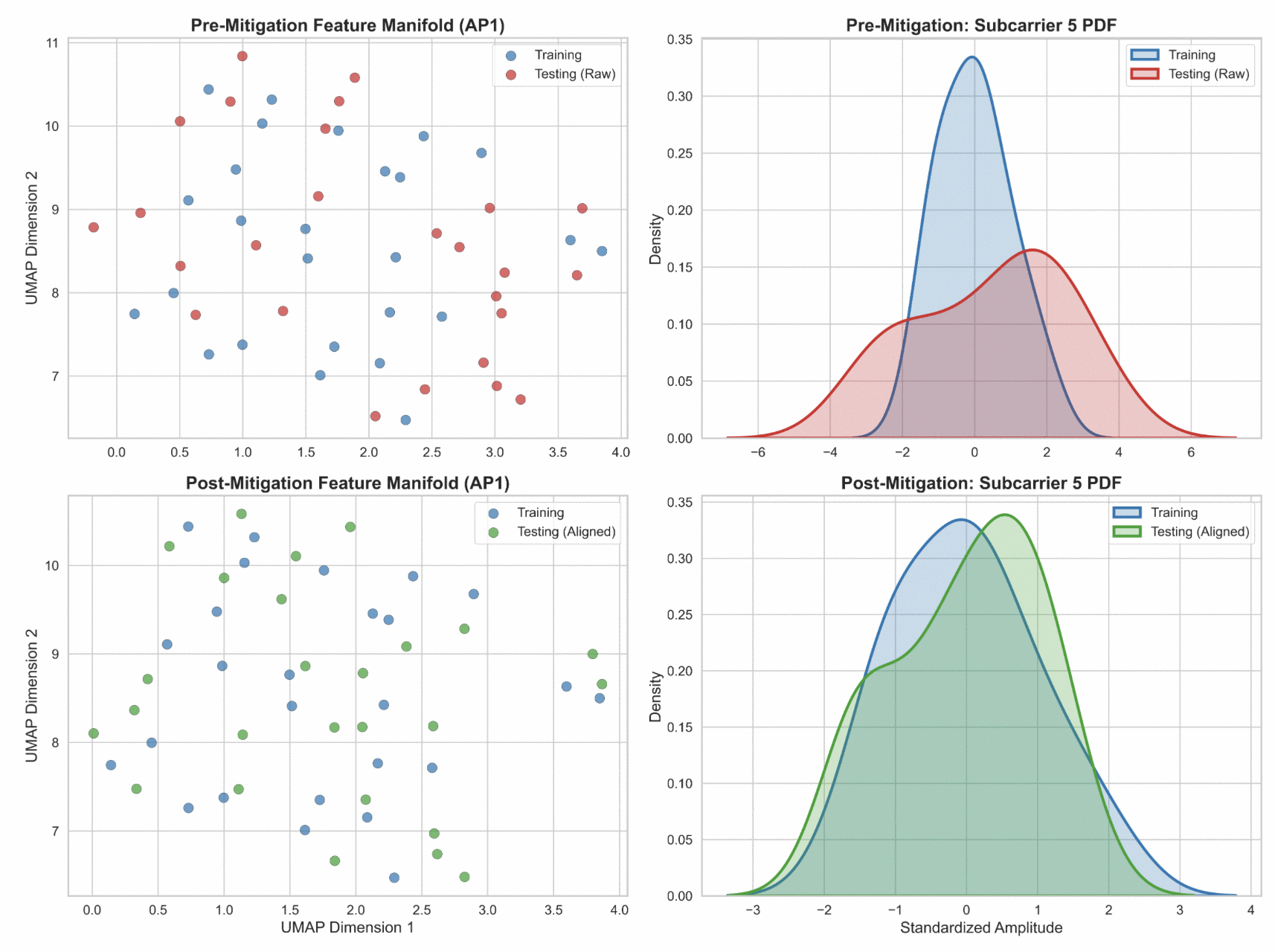
Feature manifold and density plots showing covariate shift before and after mitigation
Accepted Springer · Telecommunication Systems · 2026

Teaching a localizer to ignore the clock

Wi-Fi CSI fingerprinting collapses when you test it on a different day than you trained it. Instead of discarding corrupted packets, this framework restores the physical signal, recovering saturated receivers and formally re-establishing the i.i.d. assumption across temporally disjoint domains.

0.60 mMean error, single AP
17.9–56.8%Gain over CSILoc, all 6 nodes
30.5 msInference latency
Read the case study
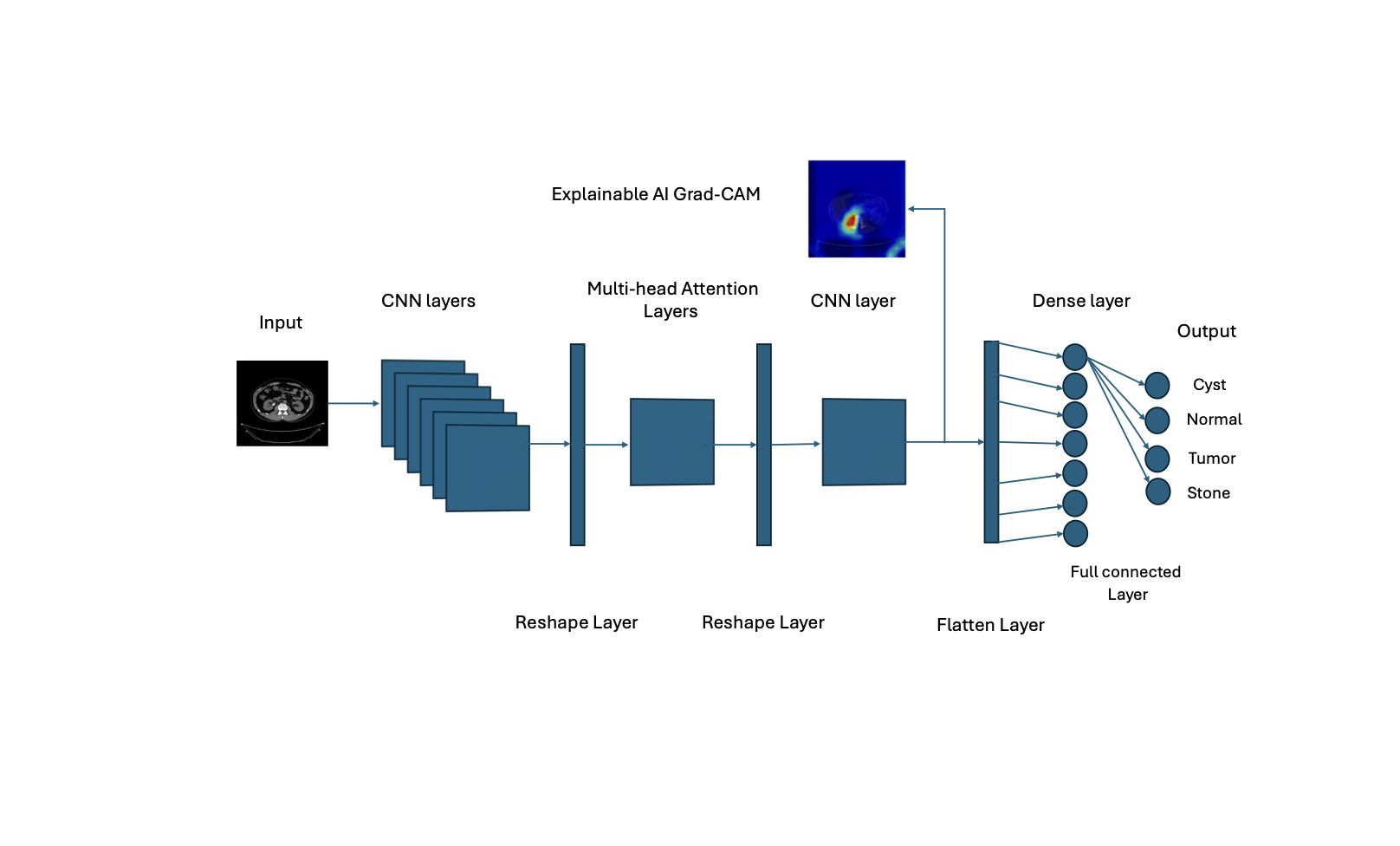
TransConvNet hybrid Transformer-CNN architecture
IEEE COMSCI Sozopol, Bulgaria · 2024

A kidney CT classifier that shows its work

CNNs see texture; they struggle with the global context radiologists rely on. Pairing convolutional locality with transformer attention closed that gap, and Grad-CAM attribution turned the output into something a clinician can actually audit.

99.9%Classification accuracy
Grad-CAMPer-decision attribution
HybridTransformer + CNN
Read the case study
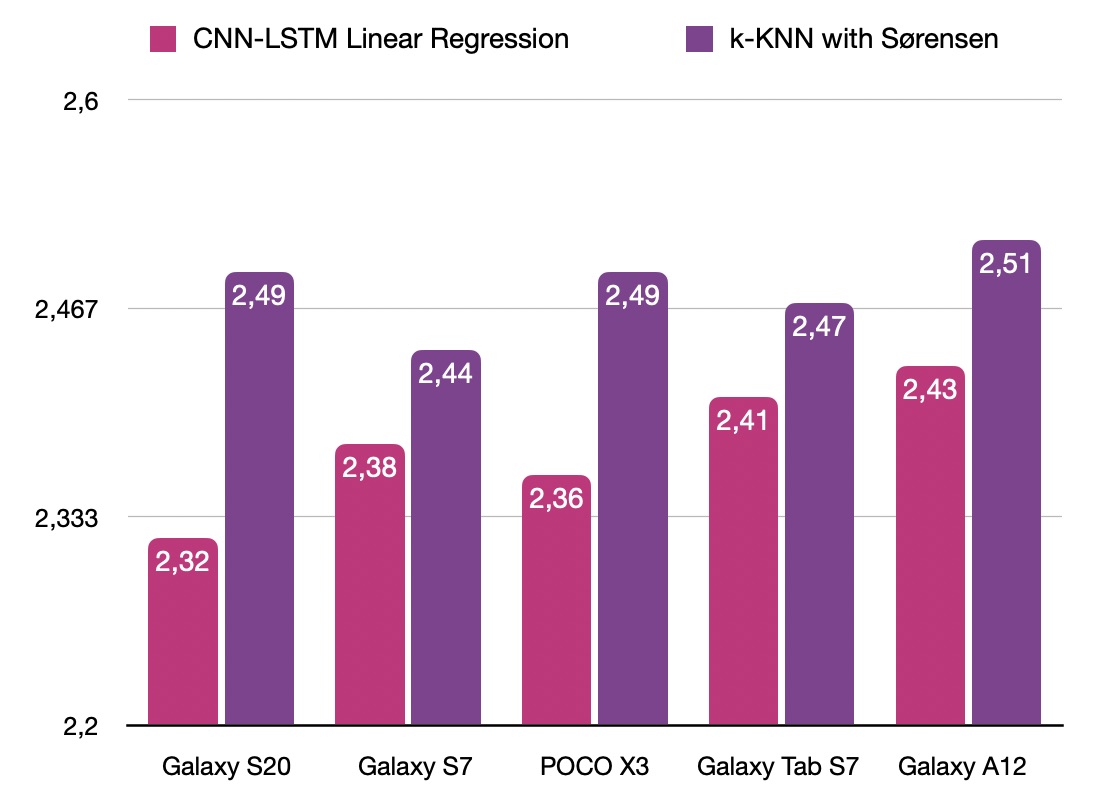
Per-device positioning error comparison across five handsets
IEEE Access Impact Factor 3.9 · 2025

Why your phone and my phone disagree about where we are

Two receivers in the same spot report different RSSI. Deep feature learning over the TUJI1 dataset recovers a device-invariant representation, so a fingerprint collected on one handset still means something on another.

2.20 m3D positioning error
0.17 mCross-device robustness gain
CNN-LSTMTemporal feature learning
Read the case study
Interactive · real measurements

Watch a localizer's assumptions break

This is not a simulation. Below are two Wi-Fi CSI captures I recorded at the same location, on the same radio and channel, 19.4 minutes apart. Nothing moved but the clock, yet the measurements drifted enough that a classifier can tell the two sessions apart almost perfectly. Everything is computed live in your browser.

Temporal covariate shift in real CSI

Reference: ref_204_1_3500.pcap (3500 packets) · Test: test_204_1_100.pcap (100 packets) · 52 usable subcarriers · PCA basis fitted on the reference session only.

Alignment
Covariance gap ‖Σr−Σt‖F
Session discriminator

Reference session Test session
Mean subcarrier amplitude: the drift, in the signal itself

How to read this: the session discriminator is a logistic classifier trying to guess which capture a packet came from. 50% means it cannot tell: the sessions are statistically indistinguishable, which is what we want. High accuracy means a localizer trained here would learn when the data was captured rather than where the device is.

CORAL whitens the test session and re-colours it with the reference covariance, X′ = (X−μt)·Σt−1/2·Σs1/2 + μs, using no labels from the test session.

Delivered work

Products with users, not just results

Research earns its keep when it survives a deadline and a real user. These are production systems: running, maintained, and answerable to someone other than a reviewer.

In production
istanbul-beauty.afateh.tech
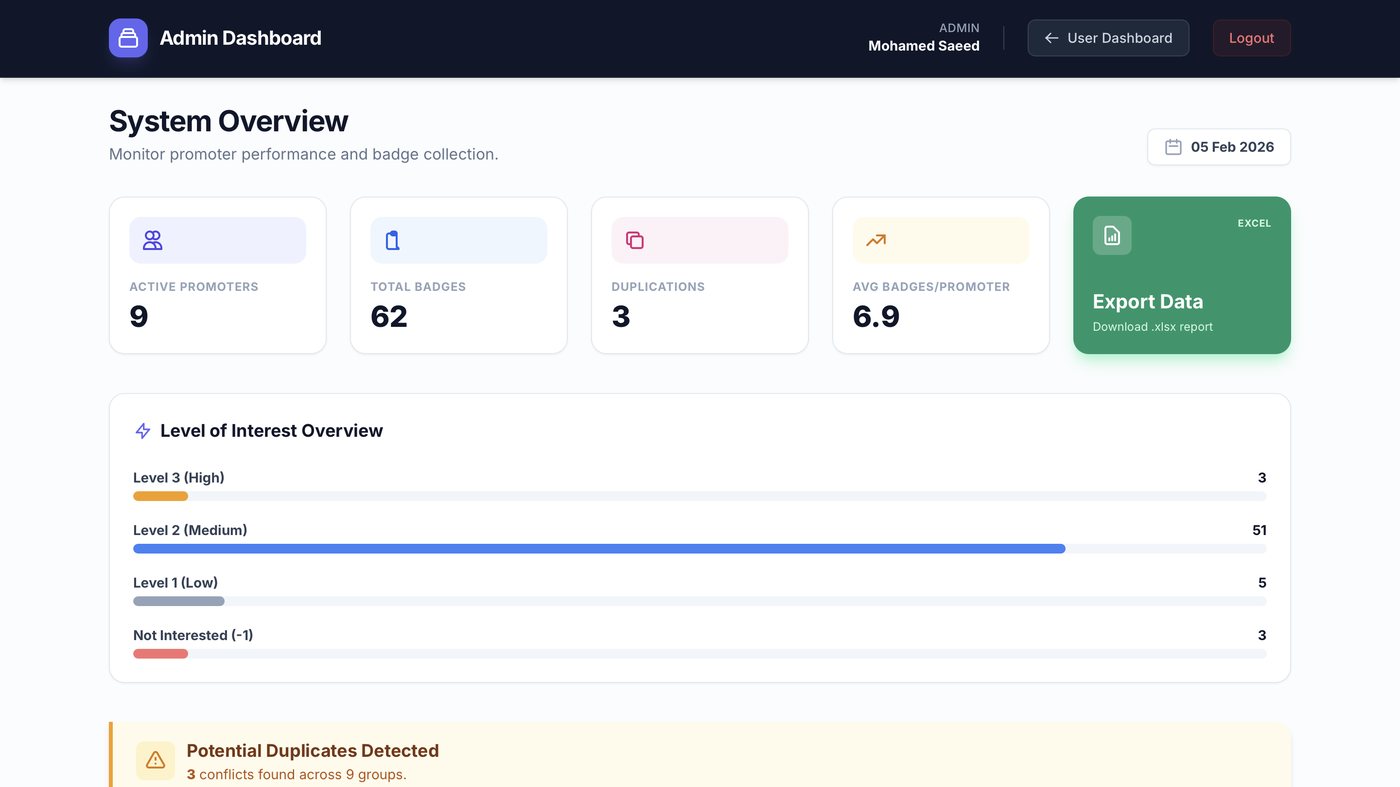
CRM dashboard showing captured and deduplicated event leads
AI system

Lead capture that reads business cards

A trade-show lead pipeline that turns a pile of business cards into clean, queryable records. Gemini Flash 2.5 reads each card directly, and the SQLAlchemy/PostgreSQL schema resolves duplicates on ingest rather than during a later cleanup.

Gemini Flash 2.5FlaskPostgreSQLPython
In production
orphan-fund.afateh.tech
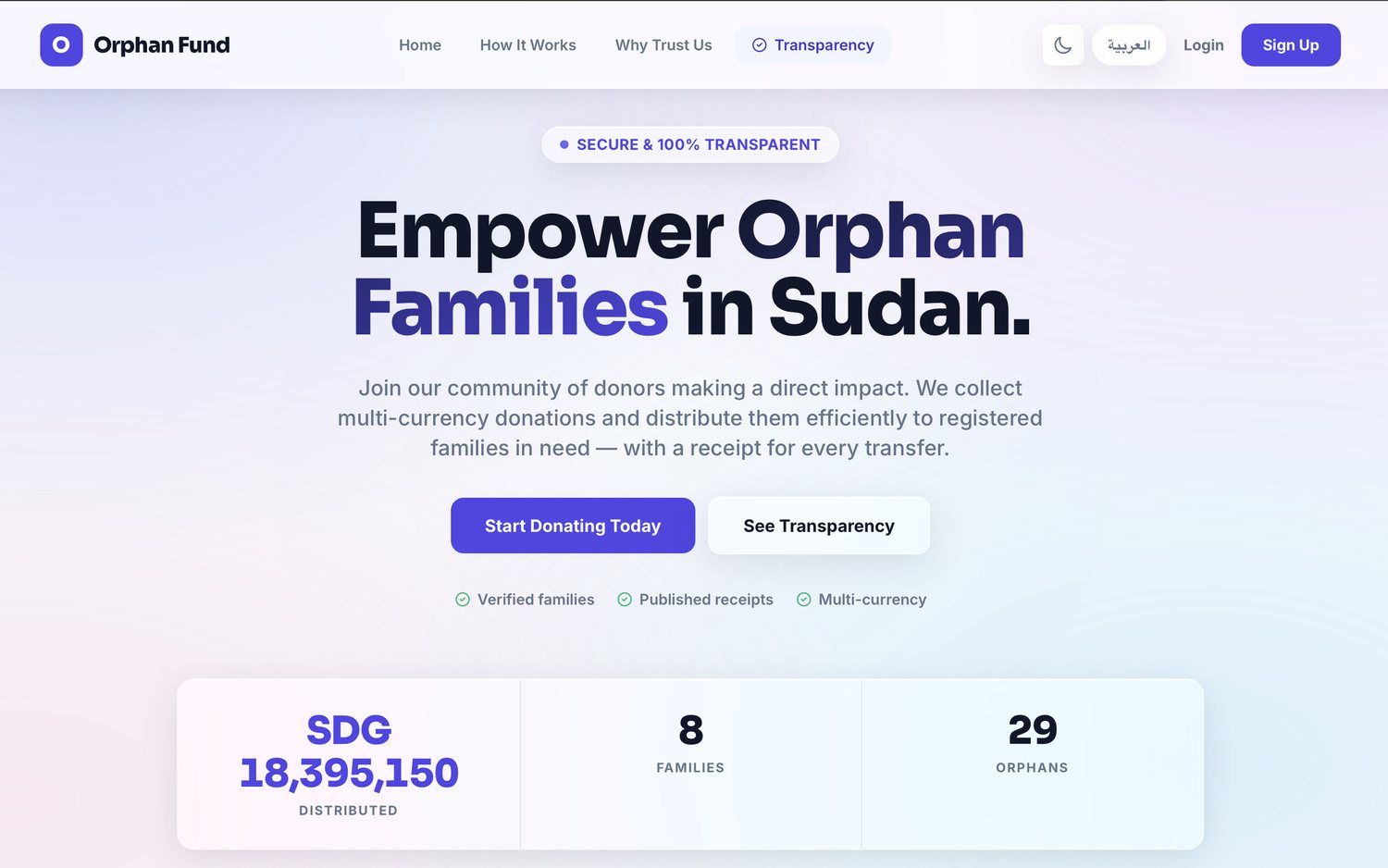
Orphan Fund homepage with a bilingual header, a Transparency link and a live band showing SDG 18,395,150 distributed to 8 families and 29 orphans
Web platform

A charity that publishes its own ledger

A donation platform for orphan families in Sudan, built so donors never have to take the word "distributed" on trust. Every transfer is verified, converted at a recorded rate and disbursed against an official receipt, with per-family timelines published openly.

Multi-currency ledgerRole-based adminEN / AR bilingualAuth & verification
In production
armtek.com.tr
Armtek Elektrik homepage with multilingual navigation, search and a Get Quote action
Web platform

A switchgear catalogue that sells

A corporate platform for a medium- and low-voltage switchgear manufacturer, built around one route: unfamiliar visitor to qualified quote request. Parallel Turkish/English routing, global search, and KVKK compliance handled up front.

Next.jsReactTailwind CSSi18n routing
Peer-reviewed

Publications

Each with a plain-language note on why it matters.

Google Scholar Full publication list, citation counts and metrics

Hardware-Resilient Deep Temporal Learning for Edge-Deployable Indoor Localization in Heterogeneous IoT Networks

Accepted

I. Ozturk, M. T. M. Saeed equal contribution

Telecommunication Systems (Springer), 2026

Why it matters: Wi-Fi positioning systems are usually retrained whenever the environment drifts. This shows the drift can be cancelled at the physical layer instead, reaching sub-metre accuracy from a single access point, even on receivers whose signal is clipped beyond what conventional pipelines can use.

Mitigating Device Heterogeneity for Enhanced Indoor Positioning System Performance Using Deep Feature Learning

IF 3.9

M. T. M. Saeed, M. A. A. Yousif, I. Ozturk

IEEE Access, 2025 · doi:10.1109/ACCESS.2025.3621505

Why it matters: Fingerprint databases are expensive to collect and stop working the moment you change handset. Learning a device-invariant representation makes that investment portable across hardware.
BibTeX
@article{saeed2025mitigating,
  author  = {Saeed, M. T. M. and Yousif, M. A. A. and Ozturk, I.},
  title   = {Mitigating Device Heterogeneity for Enhanced Indoor Positioning
             System Performance Using Deep Feature Learning},
  journal = {IEEE Access},
  year    = {2025},
  doi     = {10.1109/ACCESS.2025.3621505}
}

Impact of Environmental Control on Subjective Video Quality Assessment in Crowdsourced QoE Experiments

IF 2.6

A. Dutta, M. T. M. Saeed, S. Arawade, A. Samčović, S. Uddin, D. Juszka, M. Grega, M. Leszczuk

Electronics (MDPI), 2026, 15(8), 1666 · doi:10.3390/electronics15081666

Why it matters: Crowdsourced quality studies assume the viewing environment is noise you can average away. The statistics say otherwise. Uncontrolled conditions bias the scores that video codecs are tuned against.
BibTeX
@article{dutta2026impact,
  author  = {Dutta, A. and Saeed, M. T. M. and Arawade, S. and Sam{\v{c}}ovi{\'c}, A.
             and Uddin, S. and Juszka, D. and Grega, M. and Leszczuk, M.},
  title   = {Impact of Environmental Control on Subjective Video Quality
             Assessment in Crowdsourced QoE Experiments},
  journal = {Electronics},
  volume  = {15},
  number  = {8},
  pages   = {1666},
  year    = {2026},
  doi     = {10.3390/electronics15081666}
}

TransConvNet: Enhancing Kidney Abnormality Detection in CT Imaging through Hybrid Transformer-CNN Model with Integrated Explainability

Conference

M. T. M. Saeed, M. A. A. Yousif, A. A. M. Hakim

2024 12th Int. Scientific Conference on Computer Science (COMSCI), Sozopol, Bulgaria · doi:10.1109/COMSCI63166.2024.10778503

Why it matters: High accuracy on a medical benchmark means little if the model can't be interrogated. Attribution maps make the failure modes visible instead of latent.
BibTeX
@inproceedings{saeed2024transconvnet,
  author    = {Saeed, M. T. M. and Yousif, M. A. A. and Hakim, A. A. M.},
  title     = {TransConvNet: Enhancing Kidney Abnormality Detection in CT Imaging
               through Hybrid Transformer-CNN Model with Integrated Explainability},
  booktitle = {2024 12th International Scientific Conference on Computer Science (COMSCI)},
  address   = {Sozopol, Bulgaria},
  pages     = {1--5},
  year      = {2024},
  doi       = {10.1109/COMSCI63166.2024.10778503}
}

Improvement of Human Activity Recognition Performance by Utilizing LSTM in a Progressive Learning Structure

Conference

M. T. M. Saeed et al.

IEEE COMSCI 2024, Bulgaria · doi:10.1109/COMSCI63166.2024.10778519

Why it matters: Progressive learning lets a sequence model keep earlier competence while absorbing new activity classes, a practical answer to catastrophic forgetting in wearable sensing.
Background

How I got here

Control engineering taught me to think about systems and feedback; machine learning gave me better function approximators. That instinct (model the physics first, then learn the residual) comes from the former.

Research Assistant, MUTASK

Jul 2026 – Present

AGH University of Science and Technology · Kraków, Poland

  • Contributing to MUTASK, a €1.5M CHIST-ERA project with French, Swiss and Polish partners.
  • Leading evaluation of AI-generated video-segment depth incoherence and building the MUSTUDIO component of a multimodal scientific knowledge-processing pipeline.
Multimodal AIVideo AnalysisEvaluation Design

Research Scholar

Apr 2025 – Present

TÜBİTAK & Osmaniye Korkut Ata University · Türkiye

  • Physics-aware CSI localization recovering ADC-saturated packets: 0.60 m from a single access point, beating CSILoc on all six nodes by 17.9–56.8% (accepted, Springer).
  • CNN-LSTM framework for RSSI device heterogeneity: 2.20 m 3D error, +0.17 m cross-device robustness (IEEE Access).
  • Leading the ML component of a TÜBİTAK 1001 project on locating survivors under earthquake debris; +2.4% detection accuracy.
PyTorchDomain AdaptationMixture-of-ExpertsSignal Processing

Research Intern (Erasmus+)

Aug – Oct 2025

AGH University of Science and Technology · Kraków, Poland

  • Statistical analysis and data curation for a crowdsourced video-QoE study, published in MDPI Electronics.
Experimental DesignStatistics

Teaching Assistant

Nov 2017 – Feb 2025

Al Neelain University · Khartoum, Sudan

  • 100+ classes in robotics, microcontrollers and control; supervised 9 microcontroller projects for 80 students.
TeachingMentorship

Selective programs

ELLIS AI Winter School on Foundation Models

Amsterdam, Netherlands

Mar 2026LLMs · interpretability · tabular FMs

M2L AI Summer School

Split, Croatia · sponsored by Google DeepMind

Sep 202518% acceptance · fully funded

ALX Software Engineering, Backend Specialisation

Fully funded by Mastercard

Dec 2023 – Feb 2024APIs · databases · CI/CD

Education

Ph.D., Electrical & Electronics Eng.

Ondokuz Mayis University · Samsun

2024 – PresentGPA 3.93/4.00

M.Sc., Electrical & Electronics Eng.

Istanbul University-Cerrahpaşa

2019 – 2022GPA 3.38/4.00

B.Sc., Electronics Eng. (Control)

Al Neelain University · Khartoum

2012 – 2017Top of class · 83.67%

Technical toolbox

Modelling

PyTorchTensorFlow/Kerasscikit-learnCNN · LSTM · ResNetTransformersMixture-of-ExpertsDomain AdaptationGrad-CAM

Data & statistics

PythonSQLPandasNumPySciPyMatplotlibHypothesis testingSignal processing

Engineering

GitDockerFlaskPostgreSQLAWSCI/CDLinuxNext.js

Languages

Arabic: nativeEnglish: C1Turkish: C1

Let's talk about the hard cases

I'm interested in roles and collaborations where the data is messy, the deployment is real, and the failure modes matter. If that sounds like your problem, get in touch.